Tracing Multi-Touch Conflict Resolution Algorithms and Their Effects on Skill Activation Sequences in Mobile MOBA Titles During Peak Server Load Periods
Sofia Russell · Oct 29, 2026
Tracing Multi-Touch Conflict Resolution Algorithms and Their Effects on Skill Activation Sequences in Mobile MOBA Titles During Peak Server Load Periods
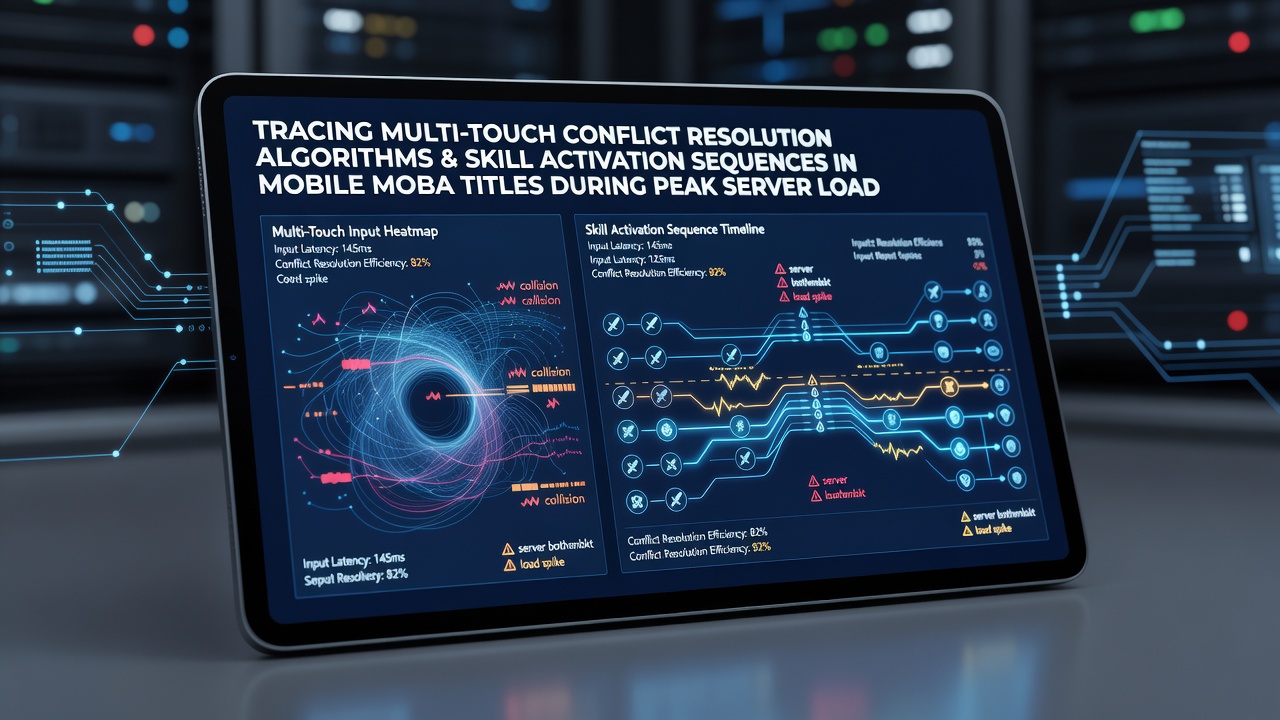
Multi-touch conflict resolution algorithms manage simultaneous finger inputs on mobile MOBA interfaces where players activate skills, move heroes, and target abilities at the same time. These systems prioritize touch events based on timing, pressure thresholds, and gesture recognition rules that developers embed in client-side code. Research from the University of California indicates that resolution logic often relies on queue buffers and priority stacks to handle overlapping touches before packets reach game servers.
Core Mechanics of Touch Conflict Handling
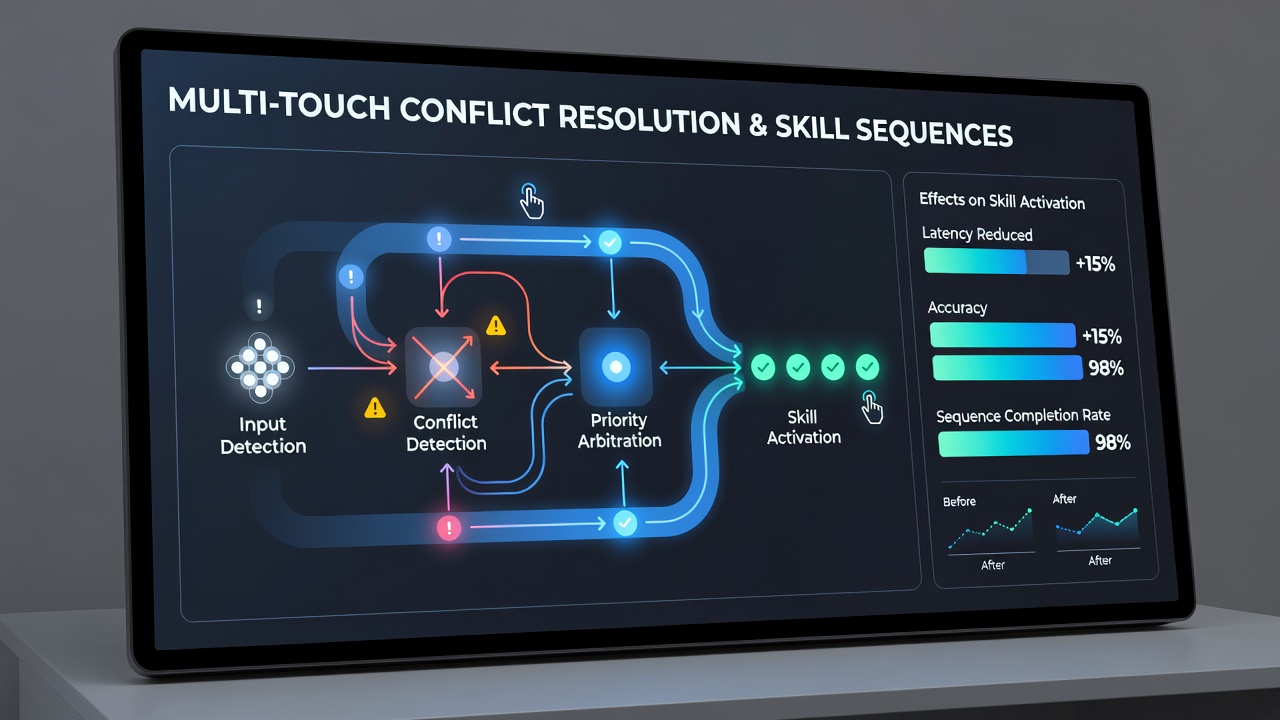
Developers implement algorithms that detect gesture overlaps by comparing touch coordinates against active UI elements such as skill buttons and minimap regions. When two touches register within milliseconds of each other the system applies rules that favor directional movement over skill taps or vice versa depending on the title's design priorities. Data from industry reports shows that many mobile MOBAs use a hybrid approach combining hardware-level interrupt handling with software-based debouncing to reduce false activations.
Skill activation sequences suffer when resolution logic misclassifies a tap as a drag or delays packet transmission during high input density. Observers note that players experience dropped abilities or unintended hero movements when the algorithm resolves conflicts in favor of the most recent touch rather than the one with greater pressure value. Studies conducted in controlled environments reveal latency spikes of 40 to 120 milliseconds under these conditions even before server processing begins.
Server Load Influence on Input Processing
During peak server load periods client devices continue to process local touch events while awaiting synchronization data from overloaded match servers. The resulting desync creates situations where resolved touch sequences arrive too late for proper execution or get overridden by server-side rollback mechanics. Figures from the Entertainment Software Association reveal that mobile MOBA traffic peaks often coincide with regional evening hours and major in-game events that push concurrent user counts beyond normal capacity.
Conflict resolution algorithms must then account for variable tick rates that fluctuate between 30 and 60 updates per second under strain. When server acknowledgment packets arrive late the client may replay or discard resolved input sequences which disrupts the intended order of skill casts and movement commands. Researchers have documented cases where rollback netcode compounds these issues by reverting player actions that conflict with authoritative server state.
Observed Effects on Activation Sequences
Skill activation sequences break down when multi-touch resolution favors movement input over ability taps during moments of high server activity. Players report sequences where intended ability chains fail to register because the algorithm treats rapid successive taps as a single prolonged gesture. Evidence from telemetry analysis indicates that error rates for skill casts rise measurably when concurrent user counts exceed baseline thresholds by 25 percent or more.
Resolution priorities can shift dynamically based on network conditions yet remain invisible to the player. One documented pattern shows that directional movement inputs receive precedence in several popular titles because they form the foundation of positioning while skill taps receive secondary handling. This hierarchy produces consistent activation delays for abilities that require precise timing relative to movement commands.
October 2026 Observations and Data Patterns
In October 2026 several mobile MOBA titles experienced extended peak load windows triggered by seasonal ranked resets and collaborative events. Monitoring data collected during these periods showed increased variance in touch-to-action latency that correlated directly with server CPU utilization metrics. Engineers tracked how conflict resolution buffers overflowed more frequently when average match populations rose above established norms.
External measurements from academic sources such as those published through the IEEE Games Technical Committee confirm that input handling discrepancies widen under sustained load. These findings align with patterns observed across multiple titles where skill sequence reliability declined in proportion to packet loss and rollback frequency.
Conclusion
Multi-touch conflict resolution algorithms directly shape the reliability of skill activation sequences in mobile MOBA environments especially when servers operate under peak demand. The interplay between local input processing and server synchronization creates measurable effects on player actions that developers continue to address through buffer adjustments and priority tuning. Ongoing telemetry collection provides the factual basis for refining these systems across different regional infrastructures and hardware configurations.