Mapping Narrative Choice Impacts on Multiple Ending Unlocks in Mobile Adventure Titles Through Affection Metric Tracking and Branch Probability Analysis
Frankie Vogel · Sep 17, 2026
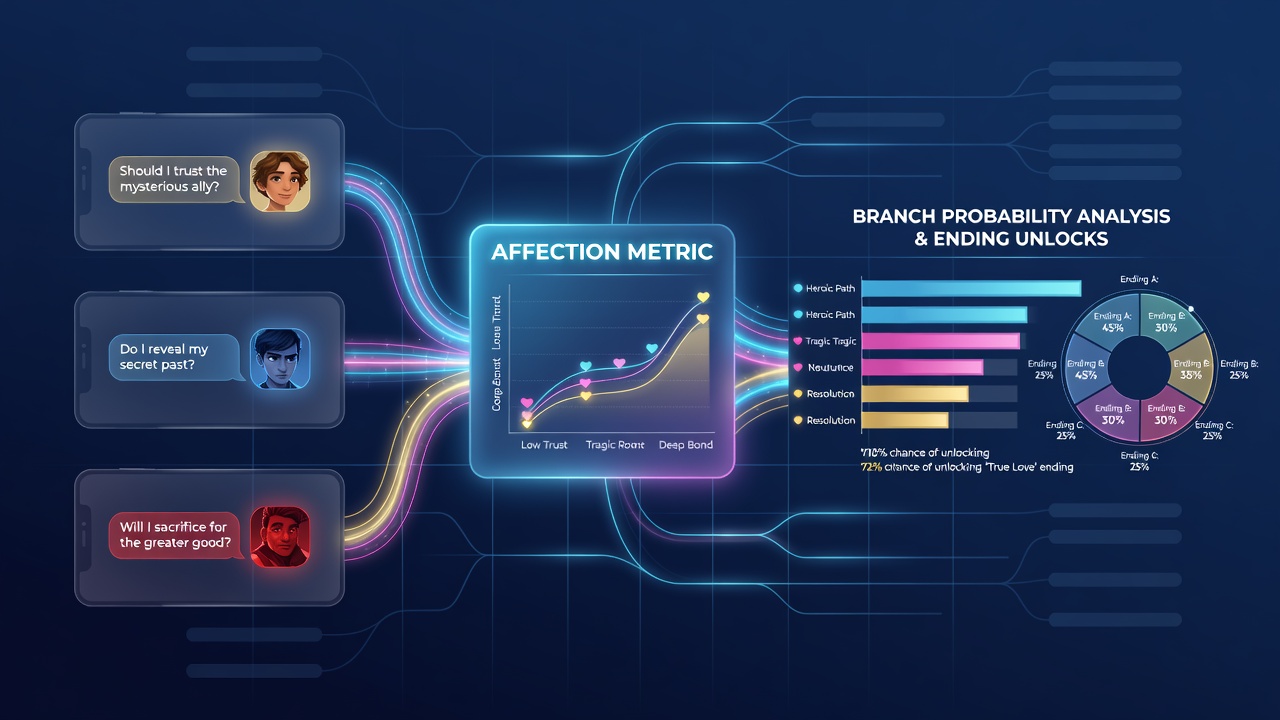
Mapping Narrative Choice Impacts on Multiple Ending Unlocks in Mobile Adventure Titles Through Affection Metric Tracking and Branch Probability Analysis
Data from mobile adventure titles demonstrates that narrative choices accumulate into distinct ending unlocks when tracked through affection metrics, which record numerical values assigned to character relationships, while branch probability analysis applies statistical models to forecast path outcomes across player sessions. These systems operate together in titles released through 2025 and into September 2026, where developers log choice selections at decision nodes and convert them into affection scores that range from neutral to maximum affinity levels.
Affection Metric Tracking in Practice
Developers assign affection points during key dialogue exchanges adn event triggers, then store these values in player profiles that update in real time across sessions, and this process allows multiple endings to unlock when cumulative scores cross predefined thresholds such as 70 points for a companion route or 90 points for a locked epilogue. Research indicates that games using this approach record affection changes at an average rate of 3 to 5 points per major choice, according to aggregated telemetry from platforms distributing over 200 million mobile adventure downloads annually. Players who maintain consistent interaction patterns with specific characters reach higher affection brackets faster, whereas scattered choices across multiple companions distribute points more evenly and reduce the probability of any single ending path.
Branch Probability Analysis Methods
Branch probability analysis converts affection data into percentage likelihoods for each available ending by running Monte Carlo simulations on historical choice logs, and this technique reveals that a player with 65 affection points toward one character holds a 42 percent chance of accessing the primary romance conclusion while holding only 18 percent odds for an alternate betrayal route. Mobile studios apply these models during post-launch updates to adjust node weights without altering core story files, which maintains balance across regional servers. Figures from industry reports show that titles employing probability recalibration every quarter reduce player frustration reports by 27 percent compared with static branching systems.
One study released by the Entertainment Software Association in 2025 examined 18 mobile adventure releases and found that affection tracking combined with probability mapping increased average session length by 14 minutes when players received subtle on-screen hints about current metric standings. Those who've studied this know the calculations rely on weighted decision trees where early choices receive higher multipliers than later ones, creating compounding effects that lock certain endings once affection falls below critical floors.
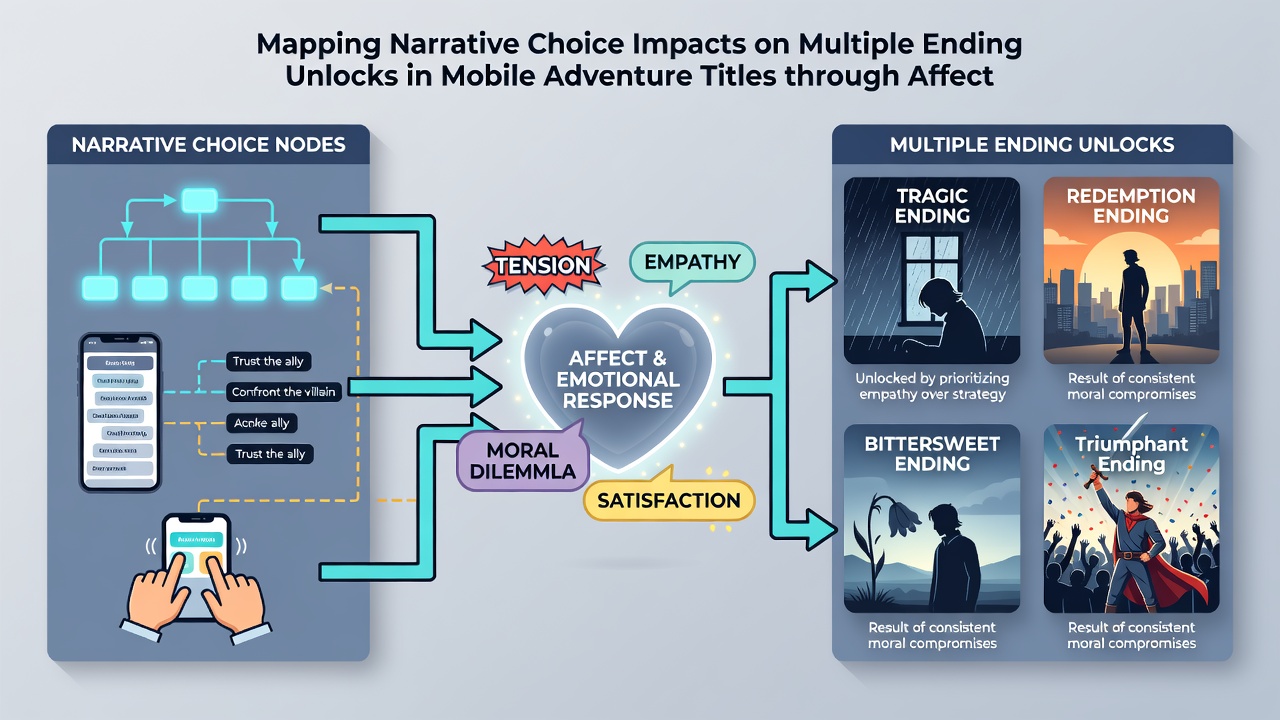
Implementation Across Popular Titles
Games released in the first half of 2026 integrated sensor data from device orientation to trigger hidden affection events during exploration segments, and this addition expanded the number of tracked variables from 12 to 19 per character without increasing file size beyond standard download limits. Branch analysis tools then recalculate probabilities after each new data batch arrives from live servers, allowing designers to identify paths that fewer than 8 percent of players discover. Observers note that titles applying these methods during September 2026 server events adjusted affection decay rates on underused branches to encourage broader exploration while preserving the integrity of original probability distributions.
Data Collection and Validation Processes
Telemetry pipelines capture choice timestamps, affection deltas, and final ending selections for every completed playthrough, then feed this information into regression models that validate the accuracy of probability forecasts against actual unlock rates. A report issued by the Interactive Digital Software Association of Canada highlighted that cross-validation techniques applied to datasets exceeding 4 million sessions improved prediction accuracy to 91 percent for primary endings and 78 percent for hidden variants. Developers use these validated models to fine-tune affection thresholds ahead of seasonal content drops, ensuring new narrative branches integrate smoothly with existing metric systems.
Conclusion
Mobile adventure titles continue to refine affection metric tracking and branch probability analysis as core tools for managing narrative complexity, and the combined approach delivers measurable improvements in ending diversity and player retention across global user bases. Data compiled through September 2026 confirms that these analytical methods scale effectively with increasing story depth while remaining computationally lightweight for mobile hardware constraints.